
Outdoor demonstrator converts sunlight directly into hydrogen, bringing hydrogen-producing solar panels closer to reality
October 2026
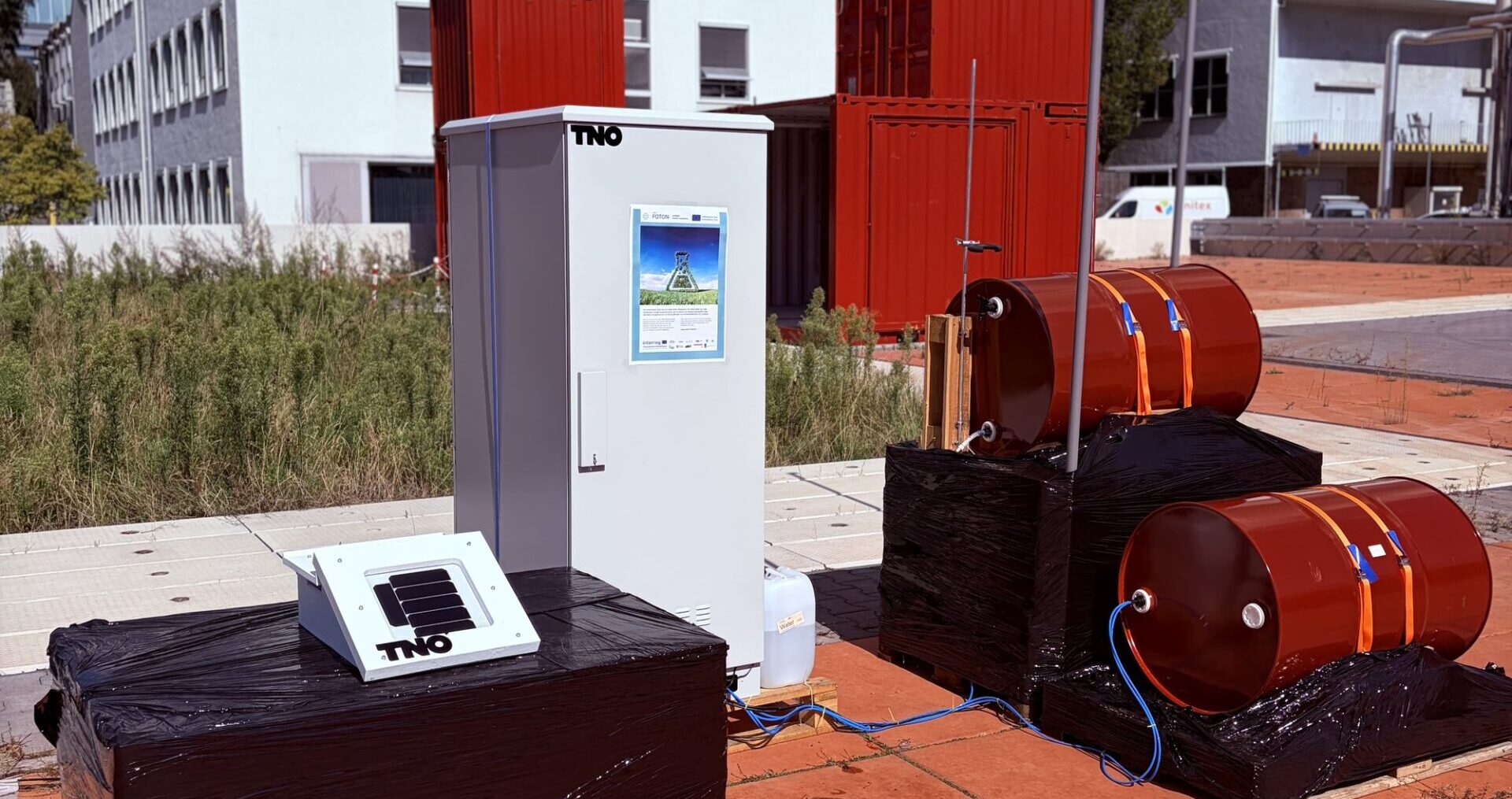
TNO has successfully demonstrated an integrated solar hydrogen system operating outdoors at Brightlands Chemelot Campus in Geleen. The demonstrator combines a specially designed solar panel and electrolyser into a single system that converts sunlight directly into green hydrogen. This achievement marks an important step towards future solar panels that produce hydrogen instead of electricity.
Hydrogen is expected to play a key role in decarbonising industries that are difficult to electrify directly, such as chemical production, steel manufacturing and heavy transport. Today, green hydrogen is typically produced using solar or wind electricity supplied through the grid. The approach developed by TNO is different: the solar panel and electrolyser are specifically tailored to work together as one integrated solar-hydrogen system, enabling sunlight to be converted directly into hydrogen on-site.
By producing hydrogen directly where solar energy is generated, the system can operate independently of the electricity grid. Renewable energy is immediately stored in the form of hydrogen, potentially helping to reduce grid congestion while providing a sustainable energy carrier for industrial applications and long-term energy storage.
Successful Operation in Outdoor Conditions
A critical step towards commercialisation is demonstrating reliable performance under real operating conditions. During the past summer, researchers from TNO operated the system outdoors under naturally varying sunlight, changing temperatures and nightly shutdown periods. The demonstrator successfully produced hydrogen throughout the day, with production closely following available sunlight.
Under strong sunlight, the system achieved peak solar-to-hydrogen efficiencies of approximately 15%. Across a typical sunny day, including periods with lower light levels in the morning and evening, average efficiencies reached around 10%.
Towards Hydrogen-Producing Solar Panels
The demonstrator is part of the TNO Solar-2-Hydrogen programme and the Interreg Vlaanderen-Nederland FOTON project. Both initiatives aim to develop technologies that use sunlight directly for renewable hydrogen production. The long-term ambition is to further integrate solar energy conversion and electrolysis into compact solar hydrogen panels that can be deployed much like conventional photovoltaic modules. Future generations are expected to incorporate advanced perovskite-silicon tandem solar technology, increasing solar-to-hydrogen efficiencies towards 20%.
“The breakthrough is not simply that we connected a solar panel to an electrolyser. We have developed and demonstrated an integrated solar-hydrogen system in which both components are specifically designed to work together. This brings us a significant step closer to solar panels that produce hydrogen directly, making renewable energy easier to store, transport and use where it is needed. Demonstrating the technology outdoors gives us valuable insights for the next generation of solar hydrogen systems.”
Nicole Meulendijks, project manager, TNO
